
Vanguard LifeStrategy ETF Portfolio Tracker: Complete Guide
TL;DR
- ▸LifeStrategy: Vanguard multi-asset ETFs with automatic rebalancing in 80/20, 60/40, 40/60 and 20/80 variants.
- ▸Excel problem: internal rebalancing, accumulating vs distributing and currency effects make manual tracking complex.
- ▸DonkyCapital: import CSV from Degiro or Scalable, track NAV, calculate TWR and compare with MSCI World or custom benchmark.
- ▸Accumulating: NAV grows with reinvested dividends — DonkyCapital tracks total return correctly.
- ▸Free plan available: start tracking your LifeStrategy portfolio today, no credit card needed.
Vanguard LifeStrategy ETFs have become one of the most popular choices for passive, long-term investors in Europe. A single fund, automatic rebalancing, global diversification — the formula is elegant. But tracking your LifeStrategy portfolio accurately requires more than a broker statement.
This guide explains how to monitor your Vanguard LifeStrategy portfolio with DonkyCapital: import transactions from Degiro or Scalable Capital, track NAV evolution, compare against benchmarks and understand your real returns.
What Is the Vanguard LifeStrategy ETF?
Vanguard LifeStrategy is a range of multi-asset ETFs that hold thousands of stocks and bonds globally, automatically rebalanced to a fixed allocation. Each variant targets a different equity/bond split, making them ideal for investors who want a set-and-forget approach.
The LifeStrategy range is available in four equity/bond allocations, both accumulating (Acc) and distributing (Dist) share classes. ISINs vary by share class and currency hedge. The most popular in Europe are the EUR-hedged accumulating versions.
Why Is It Hard to Track LifeStrategy in Excel?
On the surface, tracking a single ETF seems straightforward. But LifeStrategy has characteristics that make Excel tracking unreliable for serious analysis.
Internal rebalancing means the fund's composition shifts over time without visible transactions. For accumulating share classes, dividends are reinvested internally — your NAV grows but your transaction count does not. Currency hedging costs affect returns in ways that are not reflected in simple price tracking.
- No transaction-level data for internal rebalancing — the fund does it silently.
- Accumulating share class: no dividend payments to track, but total return still needs to be calculated correctly.
- Comparing against a benchmark (e.g. MSCI World) requires time-weighted return, not simple price appreciation.
How Does DonkyCapital Track LifeStrategy ETFs?
DonkyCapital handles LifeStrategy tracking by working with your broker's export, not by trying to reverse-engineer the fund's internals.
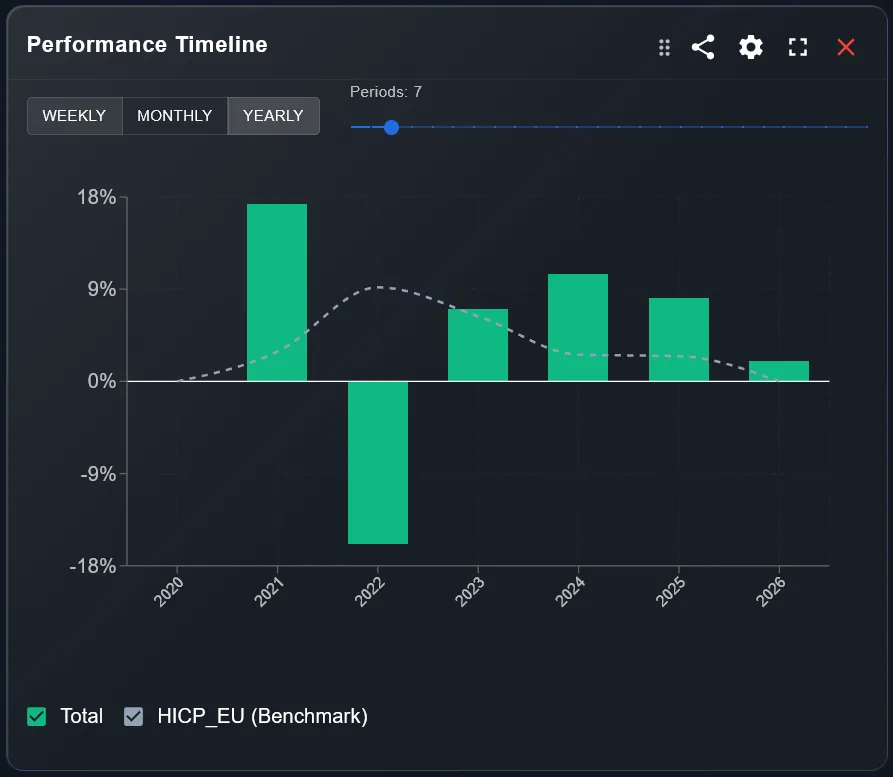
Benchmark comparison widget — compare your LifeStrategy returns against MSCI World or a custom index.
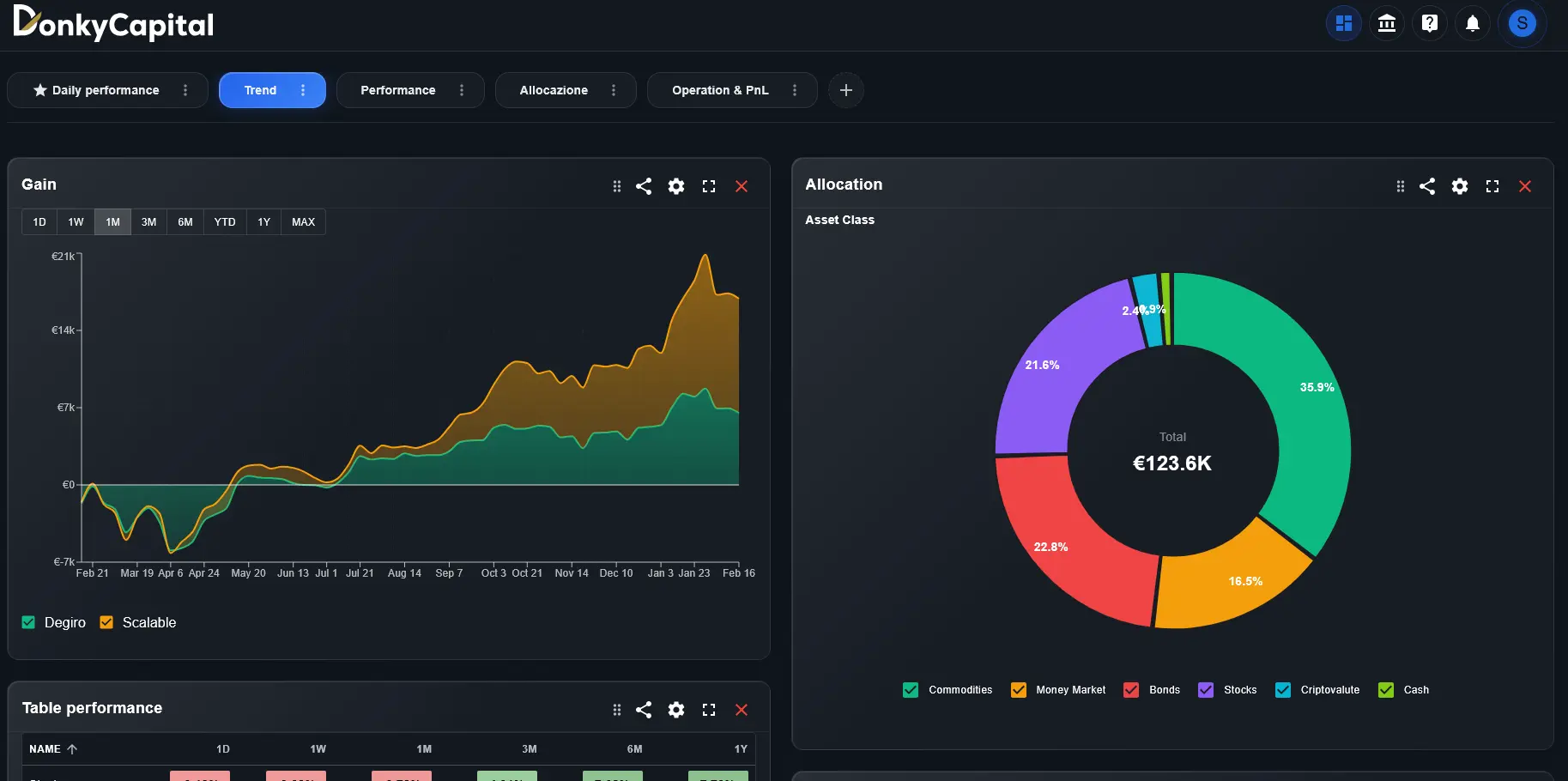
DonkyCapital portfolio dashboard — track NAV, returns and allocation across all holdings.
- CSV import from Degiro, Scalable Capital and other European brokers — import all your LifeStrategy buy/sell transactions in seconds.
- TWR calculation (Time-Weighted Return) accounts for cash flows correctly — the right metric for comparing with the fund's published performance.
- Benchmark comparison — compare your actual LifeStrategy returns against MSCI World, MSCI ACWI or a custom benchmark.
- Multi-holding support — if you hold multiple LifeStrategy variants or mix LifeStrategy with individual ETFs, DonkyCapital shows your unified allocation.
Accumulating vs Distributing: Which LifeStrategy Should You Track?
The accumulating share class reinvests dividends into the NAV — you will see no cash dividends but the NAV grows faster. DonkyCapital tracks both correctly: for accumulating funds, total return is based on NAV change; for distributing funds, dividend income is tracked separately.
From a tracking perspective, accumulating LifeStrategy is simpler — fewer transactions, no dividend reinvestment to log. Distributing LifeStrategy requires logging dividend payments if you want accurate yield calculations.
Frequently Asked Questions
Can I track Vanguard LifeStrategy ETF with DonkyCapital?
Yes. Import your Degiro or Scalable Capital CSV export and DonkyCapital will track your LifeStrategy holdings with correct return calculations, NAV history and benchmark comparison.
What is the difference between LifeStrategy 80% and 60% for tracking?
Both track the same way. The 80% variant has more equity volatility; the 60% is more balanced. DonkyCapital shows your allocation and compares each against the relevant benchmark.
Does DonkyCapital work with accumulating ETFs like LifeStrategy Acc?
Yes. Accumulating ETFs are tracked via NAV changes, not dividend payments. DonkyCapital calculates total return correctly for both accumulating and distributing share classes.
Can I import LifeStrategy from both Degiro and Scalable in the same dashboard?
Yes. DonkyCapital is designed for multi-broker tracking. Import CSVs from multiple brokers and all your LifeStrategy holdings appear in a single unified view.
Is LifeStrategy a good long-term investment?
That is outside our scope here, but LifeStrategy funds are popular for their simplicity, low cost and automatic rebalancing. DonkyCapital helps you verify that the actual returns match your expectations over time.
Track Your LifeStrategy ETF Portfolio for Free
Import your transactions from Degiro or Scalable Capital and track your Vanguard LifeStrategy portfolio with real return metrics in DonkyCapital.
Try DonkyCapital FreeFree plan available. No credit card required.